Holiday season in the United States often looks similar from house to house, so many people forget that traditions from around the world can exist right in their own communities.
“I think exposure is so important. It has nothing to do with agreement, nothing to do with someone being better or worse. It’s just about knowledge. And I think the more we know about someone, the more we can interact with that person. We can have that respect and fold that in and become better people because of it,” Graduation Specialist Eydie Clark-Reiser said.
One way students can feel more accepted throughout the school is through Clark-Reiser’s Mosaic Club.
“I feel like the norm is to go with the status quo and to mute ourselves in a way so that we don’t stand out, so we don’t rock the boat, so we don’t get asked questions that make us uncomfortable instead of empowered. There’s a space for everybody. The Mosaic Club isn’t about minority students only coming together,” Clark-Reiser said. “Mosaic Club gives our students a chance to celebrate where they came from, get to explore where they came from, and we kind of get to do that together a lot of times.”
One member of the club, junior Raquel Avila, offers a Mexican perspective on the holidays.
“I just like spending time with my family. Like getting all the family together and eating together,” Avila said. “It means home. It means love.”
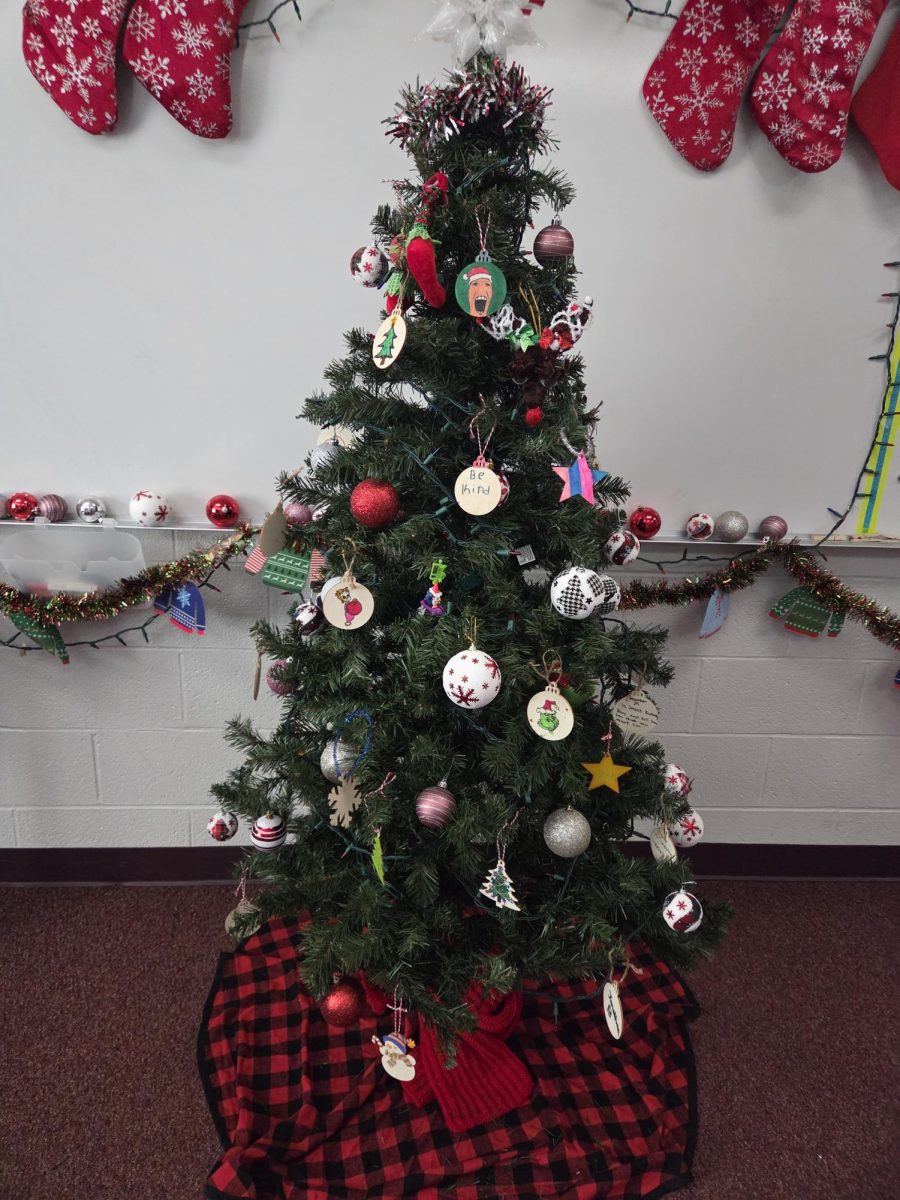
Traditions vary greatly from country to country, so getting a whole-world view is important. Senior Ella Pulvermacher shares her experiences with her Christmas tree.
“My mom puts a pickle in the Christmas tree the morning of, and all of my sisters and I have to search the tree, and whoever finds it first gets an extra gift or something,” Pulvermacher said. “It’s kind of different, not many people do that. It’s just a little extra fun thing that my family does.”
Putting a pickle in the Christmas tree is a tradition that originated from German immigrants and was popularized in the Midwest. Regardless of where someone comes from, though, the meaning of Christmas remains very similar.
“We celebrate Christmas and New Year’s. My extended family also celebrates Kwanzaa. The epitome of the Christmas story for us is love and giving. It’s also a big time to be aware of family, to reconnect if we have not been connected before. And then Kwanzaa; I don’t celebrate it full-heartedly, but it’s the reminders of the pillars of Kwanzaa, where we remember our heritage. Remembering those character pieces that make us who we are is important too,” Clark-Reiser said.