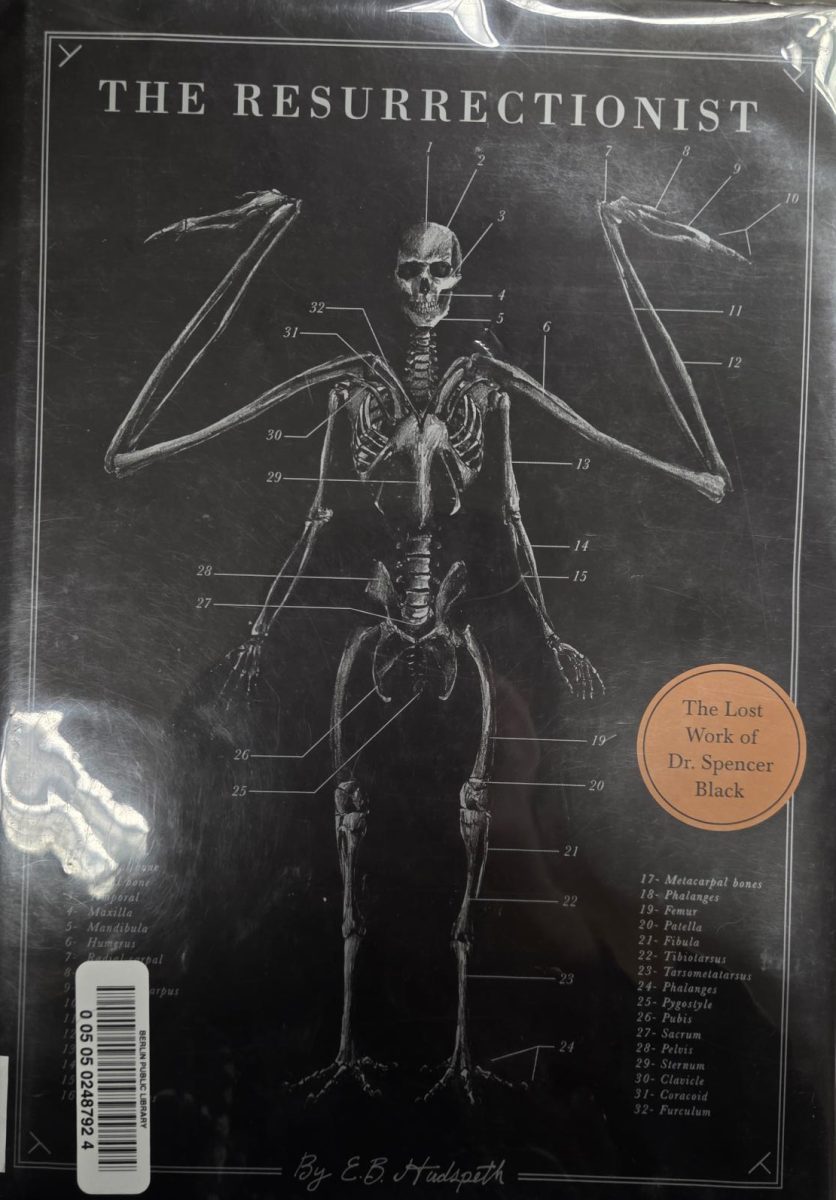
“The Resurrectionist: The Lost Work of Dr. Spencer Black,” by E.B. Hudspeth chronicles the life of the titular character Dr. Spencer Black. Dr. Black is the son of a man who was, by day, a professor, and, by night, an eerie and mysterious grave-robber. Growing up surrounded by death had a substantial impact on Spencer, and Hudspeth conveys this through a faux autobiography style.
His father raised Spencer and his older brother for Spencer’s whole life; the boys’ mother died during Spencer’s birth, as was common for women of the time. The novella takes place in the mid 19th-century, where medicine was still being heavily explored. This, combined with the taboo nature of using human cadavers, is what led Spencer’s father to peruse graveyards in hopes for a new specimen to work with in his lab. He’d often take his sons with him to carry out these duties, exposing them early on to what his work entailed. The structure within these foundational pieces offers insight to who Spencer becomes, revealing foreshadowing towards a slipping of the psychological state and an aversion towards others.
Spencer attended university first at the Medical Arts College of Boston, then the Academy of Medicine in Philadelphia. Both schools were described as prestigious, and Spencer would go on to conduct several studies for his major of anatomical studies. He eventually became a high-regarded surgeon. Driven unquestionably by the macabre, chasing fantasies and conducting experiments, Spencer led himself to one remarkable hypothesis: mankind descended from mythological creatures.
The story is unlike any others, offering both science and history-based fiction, with twists of theism in the form of ancient folktale creatures.
His work focused mainly on the mutations which could be found from children at birth. He believed intensely that, assuming the theory of DNA was true, the instructions for, say, a third hand or 13 fingers, could not just spawn from nothing. This was perhaps his most key piece of evidence, and a majority of the book explores this concept. This detail created the dark elements of gothicism, engaging readers throughout.
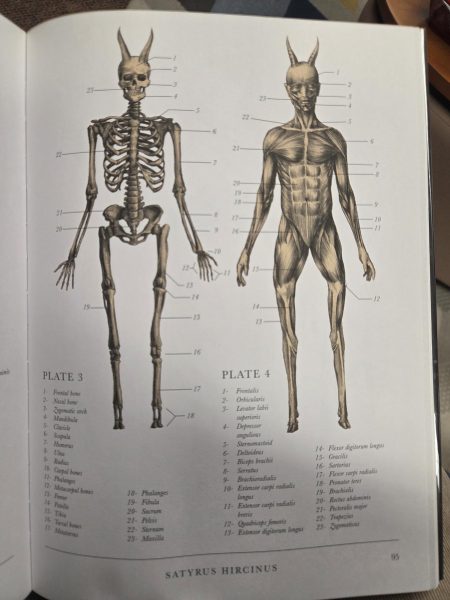
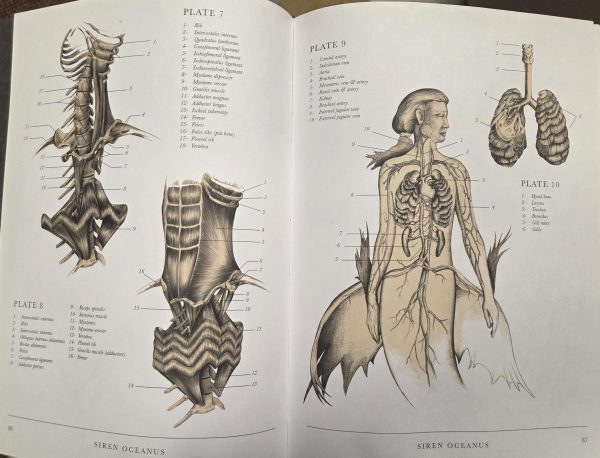
The first half of the book is written, as previously stated, in an autobiographical style. This covered recollections of the past, as well as current ambitions and motivations. Throughout this section, readers realize that their narrator is, at times, unreliable, and is going fairly insane. As an attempt to prove and dig deeper into his hypothesis on evolution, the second half of the story is filled with intricate illustrations.
From artwork to empathy, Husdpeth manages to create a work that appeals to any interests of readers who may be interested in more niche genres. A beautiful blend of gothic and historical fiction, “The Resurrectionist: The Lost Work of Dr. Spencer Black” deserves 5/5 stars.