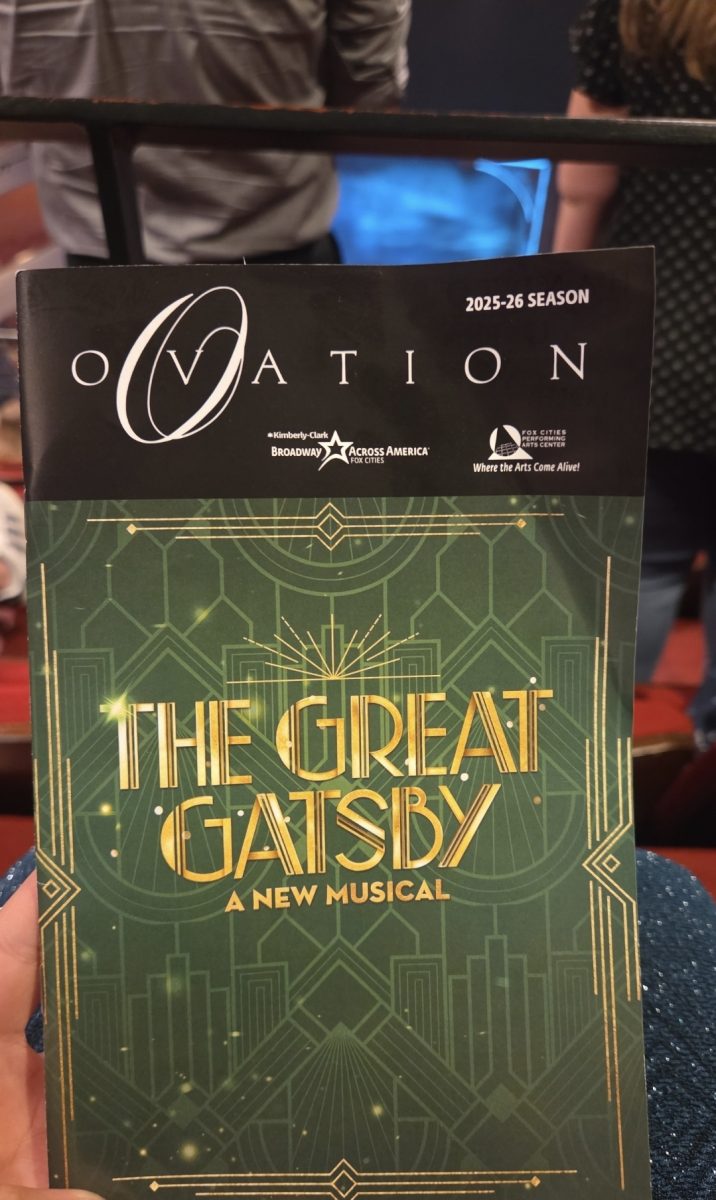
Characterized by prosperity, glam, new women, and new money, America in the 1920s could surely be described as one of the most revolutionary eras in recent history. F. Scott Fitzgerald’s “The Great Gatsby” novel captures this attitude, featuring a figurative war between new and old money, between tradition and adventure, and most of all, between love and security. Broadway’s musical adaptation of the novel launched its tour on January 31 in Maryland, but showed in Appleton, Wisconsin on April 14-19.
In terms of casting alone, the production very meticulously chose characters based on, not only skill, but also personality factors. While it might seem simple to choose lead roles grounded in musical ability, the casting featured character-accurate blends of singing, dancing, and acting. Jake David Smith and Josh Grosso were the lead male stars, playing Gatsby and Nick, respectively. Daisy was played by Senzel Ahmady, Jordan by Leanne Robinson, and Myrtle by Lila Coogan. Many of the actors have performed in other Broadway productions, including “Les Misérables,” “Frozen,” “Aladdin,” “The Book of Mormon,” “Back to the Future,” and “Phantom of the Opera.” This experience truly allowed the cast to blend together as one and perform rather than simply deliver lines.
The PAC in Appleton has credit due as well; their stage lighting and sound systems brought the experience to life. Sound was rarely an issue, but when it was, the critiques fell more on balance rather than quality. There were times when the backtracks muffled actors’ mics and the sounds of the live orchestra. That being said, everything was still audible. Diction was wonderful from the stage, and articulation from instruments that are typically harder to hear (flute, double bass, oboe, etc.) was phenomenal. Sound traveled throughout the entire auditorium, even those in the furthest row back were left in awe.
While the cast and technology were certainly useful in aiding the event, the script and songwriting were monumental, simply out of this world levels of mastery. Lyrics and lines breathed life into characters that were previously set to be less important in Fitzgerald’s original work. For example, Myrtle’s character was more than simply Tom Buchanan’s (played by Will Branner) mistress. She was given personality, and even her own song. Lila Coogan’s interpretation was nothing short of amazing. Memorable quotes like, “Tom may not be loyal, but with him I’m royalty/Do I let him break my heart and nose to gain security?” and “The only choice is love or money” gave depth and dimension to the character Fitzgerald painted to be a stepping stone into the larger plot.
The dance numbers throughout the performance, including the Charleston, various jazz, and tap routines, captured both the atmosphere of the 20s and the attention of the entire crowd. Intricate patterns and movements throughout gave complexity and variety to the show; there was something for everyone. At times, stage symmetry was slightly askew, but synchronization was never compromised.
Directed by Marc Bruni, scripted by Kait Kerrigan, lyricized by Nathan Tysen, and scored by Jason Howland, Broadway took the best talent and expertise from many domains. Due to the acting, musicality, and accuracy to the book, Broadway’s “The Great Gatsby” earns a 5/5 rating.