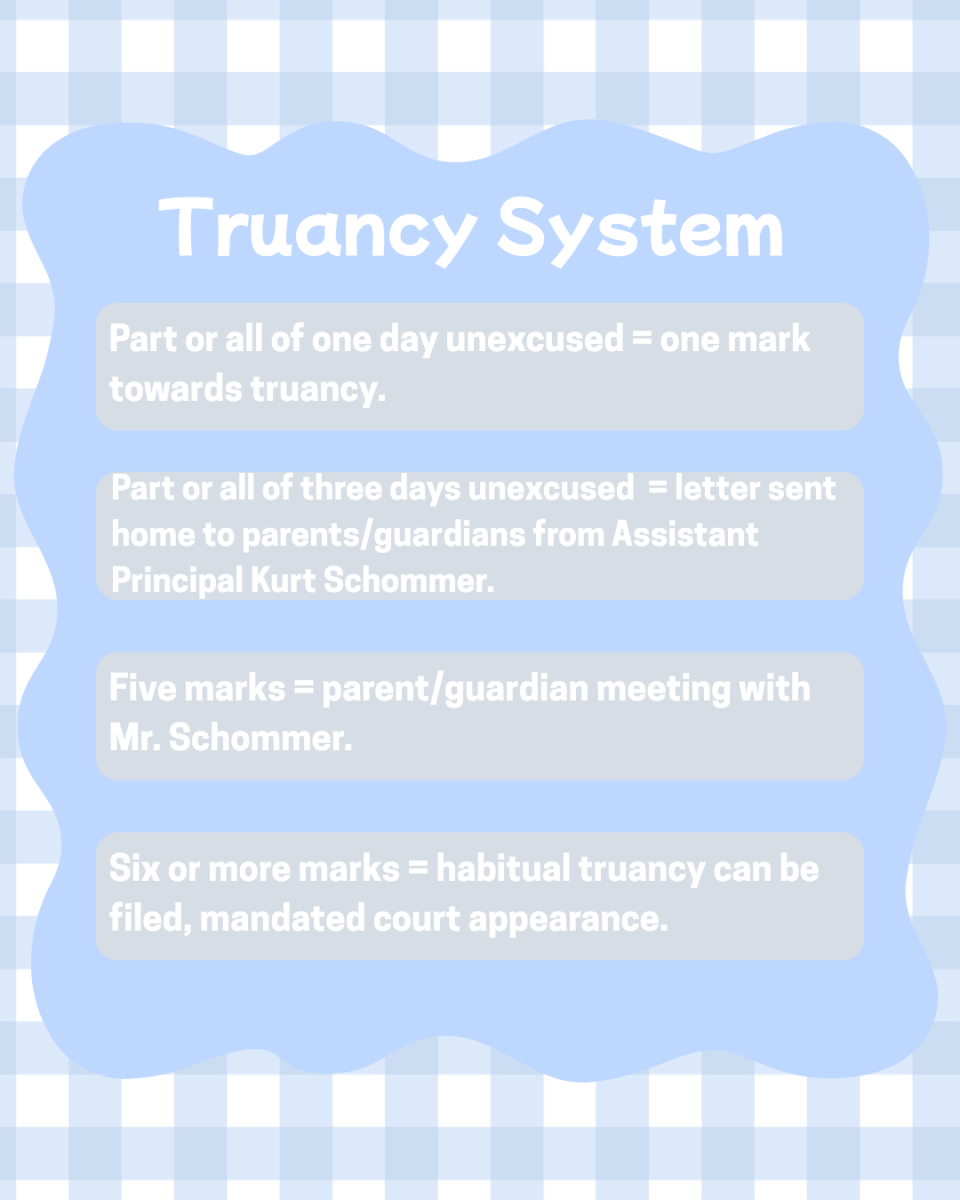
Students arriving late to class or school is nothing new, whether due to appointments, senior leave, lunch, or transitioning between classes. It is an issue that the administration is addressing. Throughout the 2024-2025 school year, truancy had been in a 2% decline, as most students had excused absences or had been punctual, and this trend is steadily continuing so far this year. With the exception of only three filed habitual truancies, this school year has been similar to last, and administrators hope it will continue to improve. Assistant Principal Kurt Schommer is in charge of all truancy and absence issues, and has created a system for confronting truant students.
“If students miss all or part of one day, that counts as one mark towards truancy. We see after they get to three, then we send a letter. We let parents know at home, like ‘Hey so-and-so has missed three or more class days, part or all of the day,’ that’s like our nice warning,” Schommer said. “Then, when it gets to five, we usually have a parent meeting of some sort, and then technically, after that fifth time, when there’s six unexcused absences, we can file a habitual truancy form.”
Once Habitual Truancy forms are filled out, they are then transferred to the School Resource Officer, who creates a case with the city of Berlin. From then on, students are issued their mandatory court dates.
“We usually don’t go right to habitual truancy; that’s kind of my last line of defense, and I like to try to use everything else beforehand. Whether it’s the county, whether it’s social workers, whether it’s getting parents more involved, we do everything that we can before habitual truancy has to be filed,” Schommer said.
Not only does missing school impact records, but it also affects academic performance. When students are late, not only are they marked tardy, but they are also behind in their lessons, creating a gap between those who understand the assignment and those who do not.
“A lot of important things happen at the beginning of the hour to set the tone for class. Instructions about what materials you need, what you should be getting ready to do, etc. When you’re late, you miss out on that,” English teacher Dr. Angela Femali said.
Usually, tardies can be prevented either by walking faster to class or leaving home/work as soon as possible. However, that is not always the case. If students are needed at work for an extended period of time or have a long walk from class to class, being on time can be tricky. By making sure that students have resources to notify about their late arrival, tardiness can be easily reduced.
“Truancy could be minimized by planning and communicating with your teachers and the secretaries about when you are going to be late. Sometimes that’s not always possible, but an effort can definitely be made,” senior Garrett Lundt said.
Students may not realize how important being punctual is, and how, by being tardy, they’re not only setting themselves back, but also their classmates.
“It affects the entire class when students enter late and disrupt the teacher’s talking, plus the class has to wait while things are potentially re-explained,” Femali said. “Students miss important information. I’ve had students arrive late with their entire lunch, which disrupts the class environment as someone lays out their spread and eats while we all have to smell it.”
By missing school, regardless of cause, students have a higher chance of falling behind their peers. Any work incomplete is work missed, learning left out, and can affect a student’s grades poorly.
“Just the instructional time that they’re missing is really important. Whether it’s homework being assigned, a review, or a test, just missing one day can set you behind farther than I think students realize,” Schommer said.