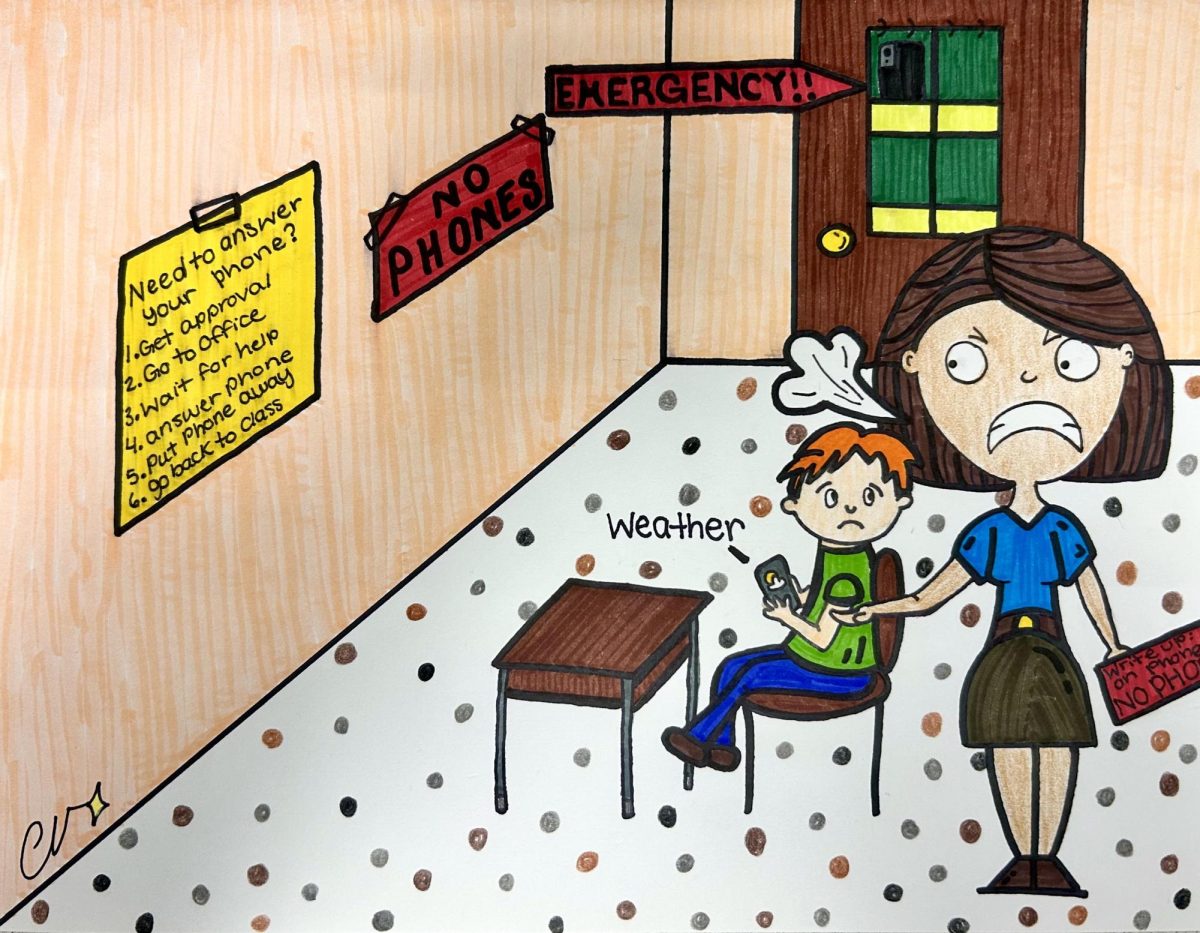
At the beginning of the 25-26 school year, the phone policy was simple: keep it out of sight (backpack, car, locker, pocket) or put it in the phone pouches hung in every classroom. If a teacher told someone to put a phone away and they didn’t, the teacher could take the phone. If it happened again, the office. Students had been allowed to use their phones at lunch, during passing periods, and to listen to music, but that could be changing, with adverse effects following.
On Halloween, a federal bill was passed in Wisconsin, saying that school administrators need to have an updated phone policy instated by July 1, 2026. While it has yet to be announced as to what that could look like, we do know what it won’t look like.
Students will be unable to have their phone on their person during class time, and will be unable to use it. That is somewhat already implemented in the building, but it will be much stricter as the policy is instituted. Administrators have the choice of when they want to allow phones, which could lead to a possibility of a restriction during noneducational time and passing periods.
This can create issues for students, as many rely on their phones for school-related information, such as sports or clubs. By not knowing scheduling adjustments, confusion can easily arise.
Another critique that students share is the impracticality of the ban in later life. With most of the upperclassmen graduating around the time the policy is instated, a good number feel that they shouldn’t have to participate if it won’t affect them in the long run. Colleges and work places don’t have state mandated phone policies, so the practice seems mundane to them.
However, the law does have small loopholes. Students with medical needs will have access to their devices, as they always have. Phones will also be accessible in emergency situations, and if the teacher permits usage during educational time.
Administrators may only see the upsides of the ban; less AI usage, more concentration, the possibility of better grades, but students don’t share those same rose-tinted glasses. While there may be upsides, they are clearly outweighed by the negative effects and uncertainty that follow.