As the semester screeches to an end, for many students it doesn’t change much. They take their finals, do their last bit of work and accept their final grade. However, for a select few students they aim to do “the impossible,” bringing F’s to C’s, C’s to A’s all in what’s been recently titled “the academic comeback.”
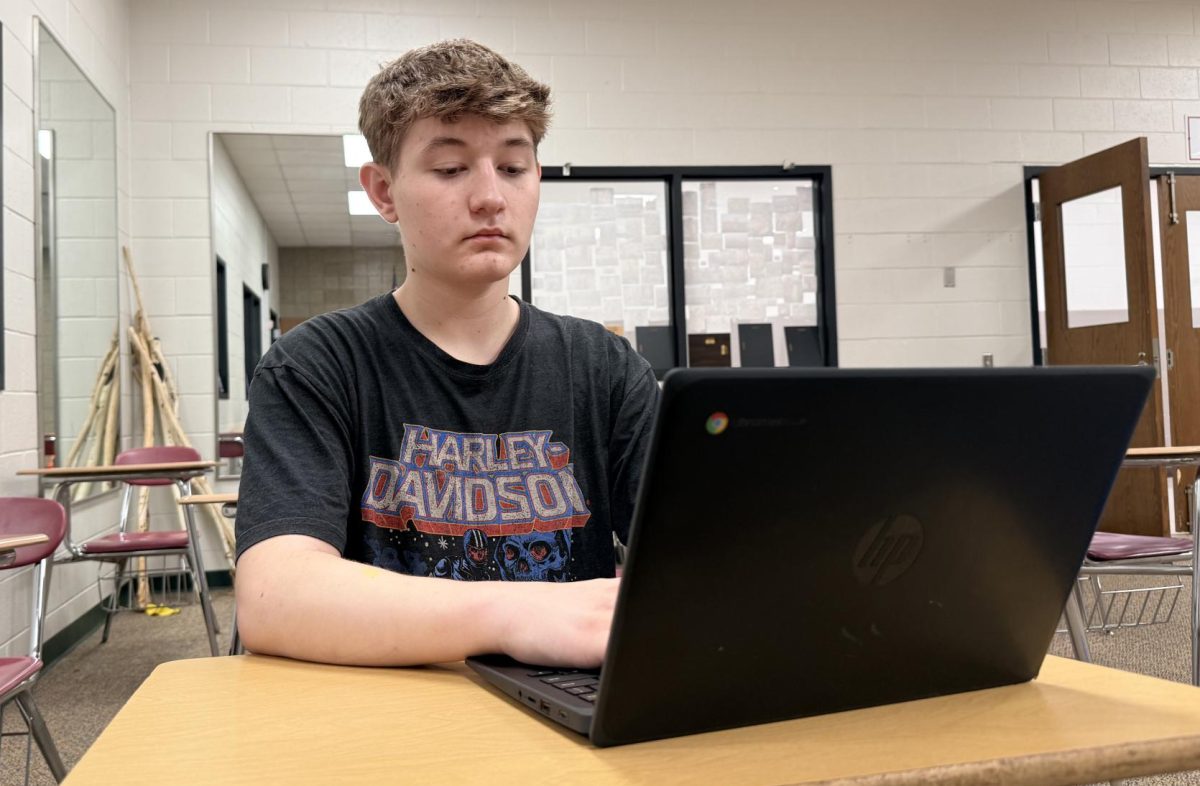
“It (an academic comeback) means realizing you’re going to or are failing a class and locking in and putting in work to pass, or do even better than passing in that class before the semester ends,” sophomore Malachi Kasuboski said.
Students attempt to bump their grade in many different ways, from retaking tests to submitting late work. The main cause: when a deadline is put into place, things get real.
“There is a clear sense that the end is finite. Knowing there is an endpoint usually causes an uptick in motivation and work completion. However, it’s frustrating that it has to be that way,” science teacher Paul Bell said. “I try to front-load the idea that learning is a progression that works all the way through. In physics, people suddenly start caring when there’s a test, but the real question is: why didn’t they care on the first day? Right or wrong, there is a definite behavior change”
Although this strategy often does boost people’s grades, many teachers are worried that when work and time are not spread across a whole semester, students aren’t learning effectively and are damaging their mental health.
“It’s super important to stay diligent because if you don’t, you end up at the end of the semester with a massive pile of make-up work and an extreme amount of stress. If you put in the effort at the beginning and throughout the term, the end of the semester is much smoother and you aren’t forced to “cram” everything in at the last minute,” science teacher Anna Drews said.
This stress is real for students as well, whether intrinsic or extrinsic, trying to bring back a low grade can be extremely time-consuming and hairpulling.
“I would say my stress is pretty high, especially when I was told I would not be able to wrestle for three weeks if I had two F’s,” Kasuboski said.
It’s not only the students that are impacted either; teachers’ workloads naturally shoot up at the end of the semester as well, and when they are flooded with late work and retakes, it only compounds.
“Students come to me asking how to get their grades up, but because they didn’t do the work all semester, they haven’t learned the material—meaning they won’t actually do any better on a retake anyway,” Drews said. “Logistically, my grading pile has doubled or tripled. I’m hunting down worksheets from two months ago, printing them, and then trying to grade them while still teaching my normal load in Biology, Advanced Bio, and Sports Science.”
Despite the difficulties with late work, many students do need the extra time to truly get a handle on the information, which is the main reason why the option to retake and hand in late work still remains on the table.
“My philosophy is: ‘I don’t care when you get it, I just want you to get it.’ For example, if you finally understand kinematics in Unit 4, you can look back at Unit 2 and laugh because it’s finally clicked. However, managing that for 25 different people is difficult. If students think they can just ‘bomb’ a test and retake it later, that’s not okay,” Bell said.
Although in high school this method may work, as students enter college, this may be a habit they have to break.
“In college, you usually don’t get retakes at all; the grade you get is the grade you keep. If you do poorly at the start, you are stuck spending the rest of the semester under immense stress trying to study even harder just to “average out” your grade. My friends who started poorly were always way more stressed than those who worked hard from day one. Work harder at the beginning so the end is easy,” Drews said.