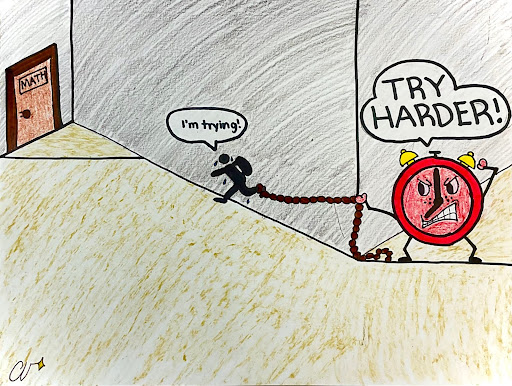
Although the intention behind our attendance policies is to encourage responsibility within students, they frequently overlook the everyday challenges students encounter.
Under the attendance rules, walking into class seconds after the bell counts as a tardy. After three tardies, students will receive a lunch detention, and if they miss this detention, the punishment will double.
While the expectations do seem rather simple to follow, in reality students don’t have full control over every minute of their day. Passing time is four minutes, which makes it difficult for students traveling from the far end of the high school to the middle school wing for band and choir. Along with there only being one multi-stall restroom on each floor, the overcrowding of students means choosing between being on time or meeting basic needs.
Lunch runs for only 36 minutes, students speed out of the parking lot, racing to grab a quick bite while still making it back to school on time.
Mornings come with obstacles, as numerous students are juggling family duties such as dropping off younger siblings at school.
None of these circumstances are about making excuses; they are real barriers that many students have to face daily. Yet, these problems aren’t always recognized within current policies.
While teaching students to be on time does build essential lifelong skills, like time management and personal responsibility, accountability and empathy should coexist. A system that allows reasonable flexibility does not erase responsibility; it simply acknowledges realities. It also creates a healthier, more supportive environment where students feel motivated.